Affect Expression in Language, Culture, and Social Context
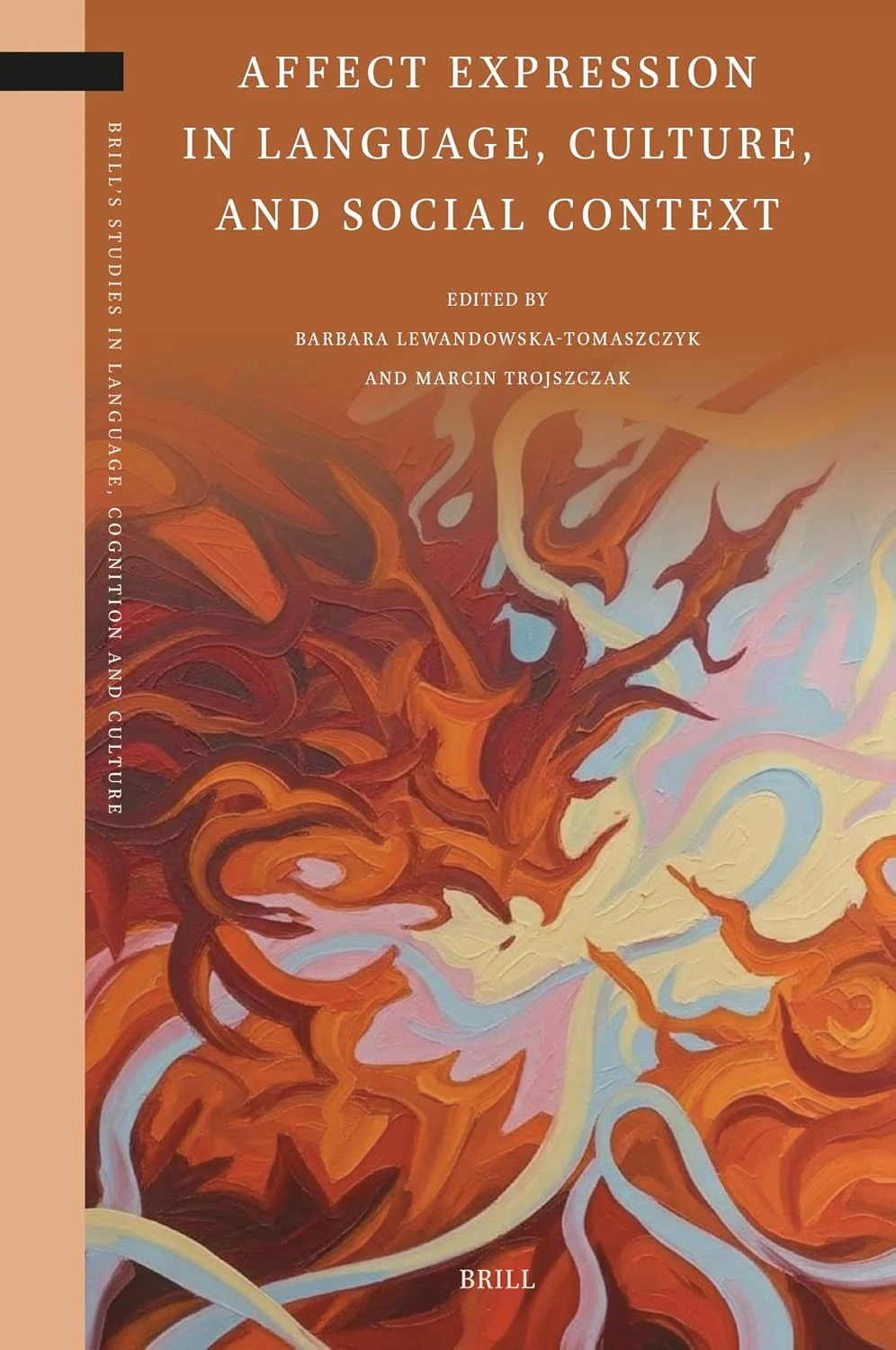
This volume sheds light on the complex nature of affect expression by investigating its various linguistic, cultural, and social manifestations.
Divided into two parts, it first explores affective phenomena from cognitive, comparative, and cross-linguistic perspectives, offering novel insights into the conceptualisations and expression of affect, i.e., emotions, moods, feelings in languages such as Tok Pisin, Vietnamese, Chinese, Polish, and Romanian.
In the second part of the book, the authors venture into social contexts where affect and language intersect with everyday interactions (child socialisation, ironical exchanges), education (mother tongue, boredom in the classroom), and translation.
The papers present an understanding of the complex ways affect is expressed in different languages and cultures and bring these differences to life. The papers are not just theories; they are examples that show how affect is truly felt, understood, and communicated.
Description
This volume sheds light on the complex nature of affect expression by investigating its various linguistic, cultural, and social manifestations.
Divided into two parts, it first explores affective phenomena from cognitive, comparative, and cross-linguistic perspectives, offering novel insights into the conceptualisations and expression of affect, i.e., emotions, moods, feelings in languages such as Tok Pisin, Vietnamese, Chinese, Polish, and Romanian.
In the second part of the book, the authors venture into social contexts where affect and language intersect with everyday interactions (child socialisation, ironical exchanges), education (mother tongue, boredom in the classroom), and translation.
The papers present an understanding of the complex ways affect is expressed in different languages and cultures and bring these differences to life. The papers are not just theories; they are examples that show how affect is truly felt, understood, and communicated.