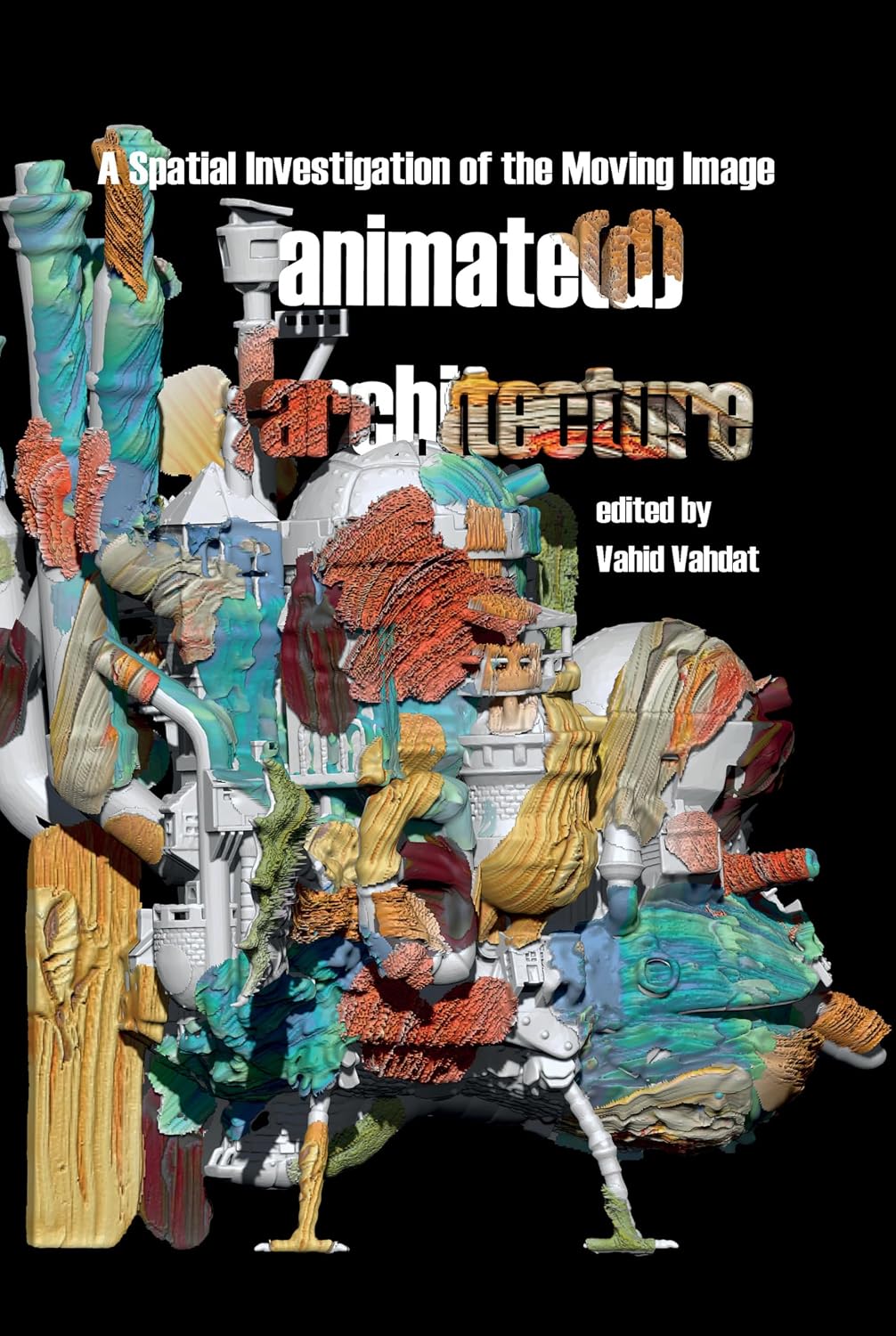
Animate(d) Architecture
At their peak, architectural marvels such as the Sagrada Família, the Tower of London, the Mosque–Cathedral of Córdoba, and the Eiffel Tower had a combined annual visit of almost 16.4 million people. The animated icebound castle in Disney’s Frozen (2019) had 116.4 million views from one single YouTube trailer in less than 24 hours.
The spaces of such massively consumed animation have, for generations, informed the architectural imagination of people across the globe from very early in their lives. Yet, not only have the architectural disciplines remained rather absent in the design of these massively consumed spaces, but architectural theory has also failed to articulate a framework to approach the architecture of animation.
To address this void, Animate(d) Architecture offers an interdisciplinary approach to survey the role of space in animation, including in creating humorous moments in early cartoon shorts, generating action and suspense in Japanese anime, and even stimulating erotic pleasure in pornographic Hentai. Exploring the imagined architecture of animation—from early motion pictures to digital animation and from computer graphics to game engines—offers an analytical frame to reconceptualise space.
An Open Access version of Yuko Yoshida's chapter "Animated Embodiments of Witnessing: An Architectural Narrative of Silence" is available on the Liverpool University Press website.
Description
At their peak, architectural marvels such as the Sagrada Família, the Tower of London, the Mosque–Cathedral of Córdoba, and the Eiffel Tower had a combined annual visit of almost 16.4 million people. The animated icebound castle in Disney’s Frozen (2019) had 116.4 million views from one single YouTube trailer in less than 24 hours.
The spaces of such massively consumed animation have, for generations, informed the architectural imagination of people across the globe from very early in their lives. Yet, not only have the architectural disciplines remained rather absent in the design of these massively consumed spaces, but architectural theory has also failed to articulate a framework to approach the architecture of animation.
To address this void, Animate(d) Architecture offers an interdisciplinary approach to survey the role of space in animation, including in creating humorous moments in early cartoon shorts, generating action and suspense in Japanese anime, and even stimulating erotic pleasure in pornographic Hentai. Exploring the imagined architecture of animation—from early motion pictures to digital animation and from computer graphics to game engines—offers an analytical frame to reconceptualise space.
An Open Access version of Yuko Yoshida's chapter "Animated Embodiments of Witnessing: An Architectural Narrative of Silence" is available on the Liverpool University Press website.