Climate Change Science
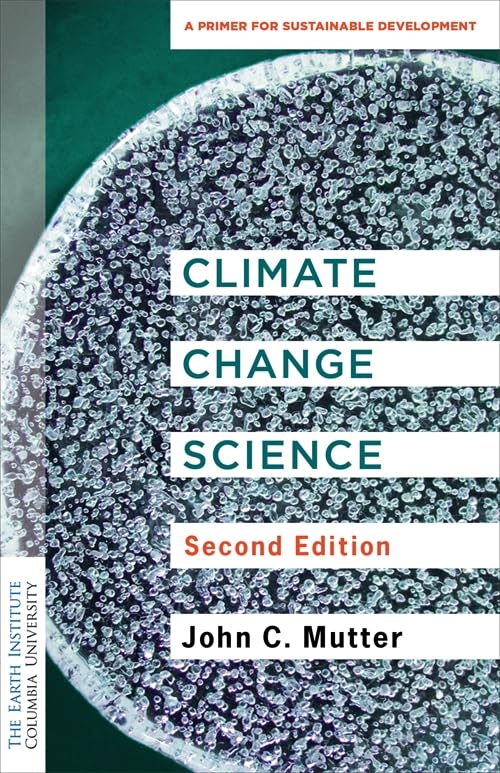
How will future climates be different from today's world—and what consequences will changes in climate have for societies? Climate Change Science is a primer on the fundamental science of climate change and climate prediction, now updated to reflect the latest research. It is accessible for readers with little to no background in science, particularly geared toward those studying sustainable development.
John C. Mutter provides a just-the-facts overview of how the climate system functions and what we know about why changes occur. He details how human activity affects global climate, explaining consequences of rising temperatures such as sea level rise, hurricane behaviour, and climate variability. The primer also discusses how climate predictions are made and examines the sources of uncertainty in forecasting.
This second edition incorporates updates to the science that have occurred since the book's original publication, including the most recent IPCC Assessment Report. It adds a discussion of attribution science—the ability to determine the extent to which extreme weather was the result of climate change. It also features a new chapter on geoengineering, exploring proposals to mitigate or even reverse climate change by reducing the amount of solar radiation that reaches Earth or directly removing carbon dioxide from the atmosphere.
Description
How will future climates be different from today's world—and what consequences will changes in climate have for societies? Climate Change Science is a primer on the fundamental science of climate change and climate prediction, now updated to reflect the latest research. It is accessible for readers with little to no background in science, particularly geared toward those studying sustainable development.
John C. Mutter provides a just-the-facts overview of how the climate system functions and what we know about why changes occur. He details how human activity affects global climate, explaining consequences of rising temperatures such as sea level rise, hurricane behaviour, and climate variability. The primer also discusses how climate predictions are made and examines the sources of uncertainty in forecasting.
This second edition incorporates updates to the science that have occurred since the book's original publication, including the most recent IPCC Assessment Report. It adds a discussion of attribution science—the ability to determine the extent to which extreme weather was the result of climate change. It also features a new chapter on geoengineering, exploring proposals to mitigate or even reverse climate change by reducing the amount of solar radiation that reaches Earth or directly removing carbon dioxide from the atmosphere.