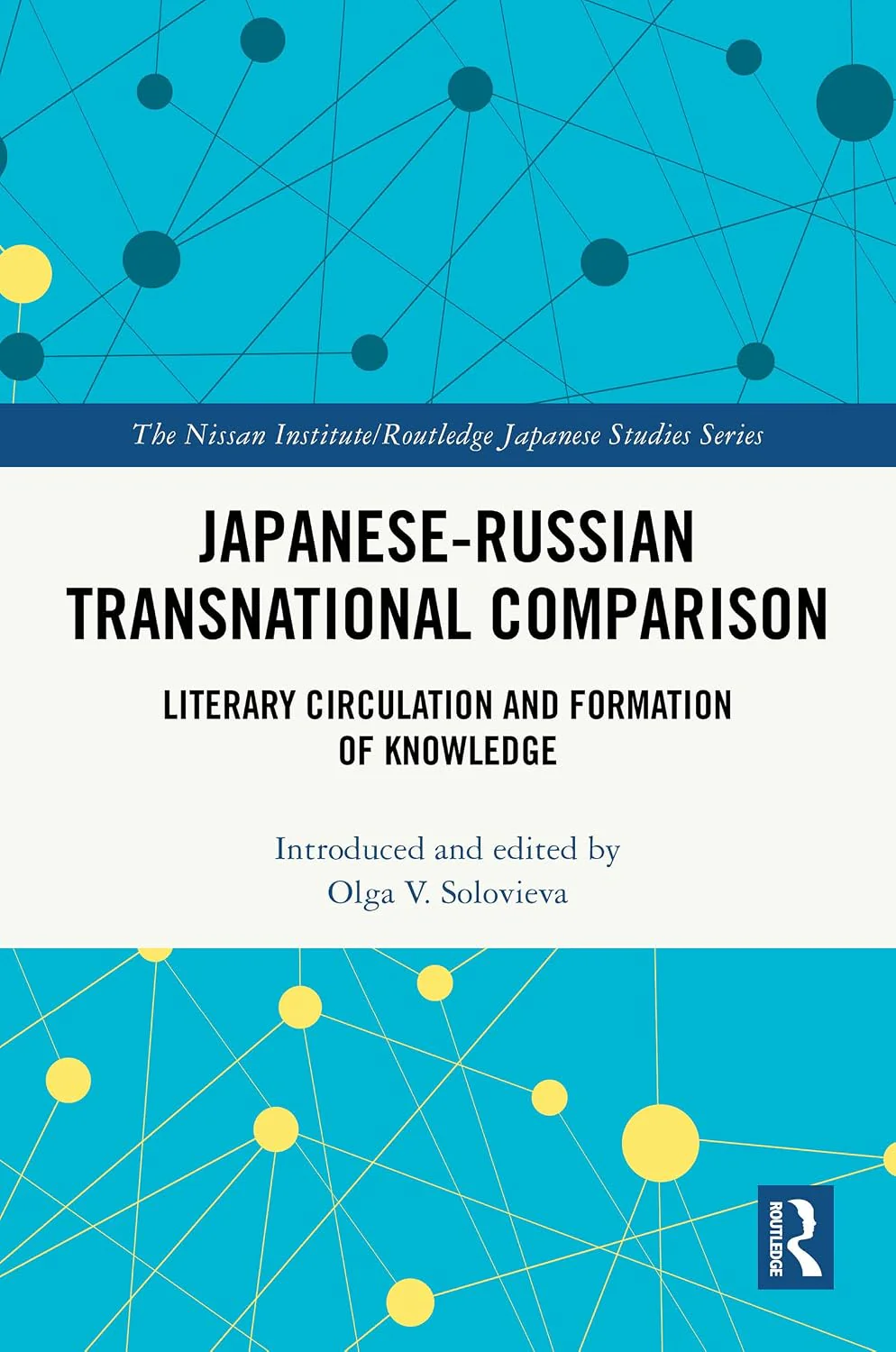
Japanese-Russian Transnational Comparison
This book examines the transnational circulation of knowledge between Russia and Japan from the early Meiji era to the present day, reconfiguring the East-West paradigm both in terms of socio-geographical divides and cultural and political tensions within both cultures.
Featuring chapters from the fields of literature, history, philosophy, film, and social and political thought, the case studies give interdisciplinary examples of the ways in which Russian-Japanese intellectual relations offer cross-cultural interconnections and emphasize the global circulation of ideas while undermining reductive national constructs.
By switching the perspective on the cultural history from the grand narratives of modernization and Westernization to that of individual and local case studies of agency, engagement, and creativity on the ground, the book uncovers a much more diverse, fluid, and complex landscape of intellectual history, rich in alternative contexts for understanding the past and embracing the future.
Revealing not only the historical points of transfer of ideas, but also the textual and disciplinary forms of this transfer, Japanese-Russian Transnational Comparison will appeal to students and scholars of the culture, literature, society, and history of both Japan and Russia.
Description
This book examines the transnational circulation of knowledge between Russia and Japan from the early Meiji era to the present day, reconfiguring the East-West paradigm both in terms of socio-geographical divides and cultural and political tensions within both cultures.
Featuring chapters from the fields of literature, history, philosophy, film, and social and political thought, the case studies give interdisciplinary examples of the ways in which Russian-Japanese intellectual relations offer cross-cultural interconnections and emphasize the global circulation of ideas while undermining reductive national constructs.
By switching the perspective on the cultural history from the grand narratives of modernization and Westernization to that of individual and local case studies of agency, engagement, and creativity on the ground, the book uncovers a much more diverse, fluid, and complex landscape of intellectual history, rich in alternative contexts for understanding the past and embracing the future.
Revealing not only the historical points of transfer of ideas, but also the textual and disciplinary forms of this transfer, Japanese-Russian Transnational Comparison will appeal to students and scholars of the culture, literature, society, and history of both Japan and Russia.