Machiavellian Ontology
The twentieth century was the century of the deconstruction of all absolutes: of liberation understood as a critique of every meaningful structure. In this sense, conflict was understood as an instrument of the rupture of every form, institution and community.
Niccolò Machiavelli is the first in our tradition to think about the productivity of political conflict—its capacity, on the model of ancient Rome, to construct new orders, institutions and forms of life.
Francesco Marchesi offers an original reading of Machiavellian thought as well as a critique of some of the most influential contemporary theories of conflict, including Foucault, Schmitt, Arendt, Lacan and Althusser. In doing so, he proposes an innovative, conflictual political ontology that, with Machiavelli, is capable of conceiving the affirmative, and not only deconstructive, power of conflict.
Machiavellian Ontology illuminates the enduring relevance of Machiavellian ideas and their application to modern political thought.
Original: $51.99
-65%$51.99
$18.20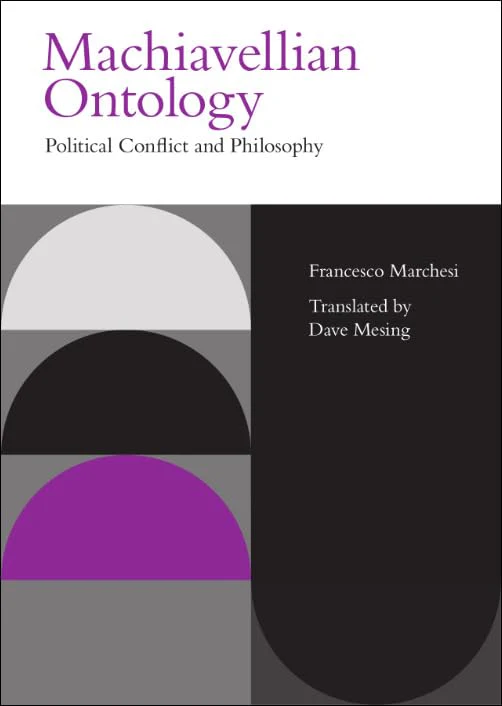
Description
The twentieth century was the century of the deconstruction of all absolutes: of liberation understood as a critique of every meaningful structure. In this sense, conflict was understood as an instrument of the rupture of every form, institution and community.
Niccolò Machiavelli is the first in our tradition to think about the productivity of political conflict—its capacity, on the model of ancient Rome, to construct new orders, institutions and forms of life.
Francesco Marchesi offers an original reading of Machiavellian thought as well as a critique of some of the most influential contemporary theories of conflict, including Foucault, Schmitt, Arendt, Lacan and Althusser. In doing so, he proposes an innovative, conflictual political ontology that, with Machiavelli, is capable of conceiving the affirmative, and not only deconstructive, power of conflict.
Machiavellian Ontology illuminates the enduring relevance of Machiavellian ideas and their application to modern political thought.