Mitigating the “Skills Gaps”
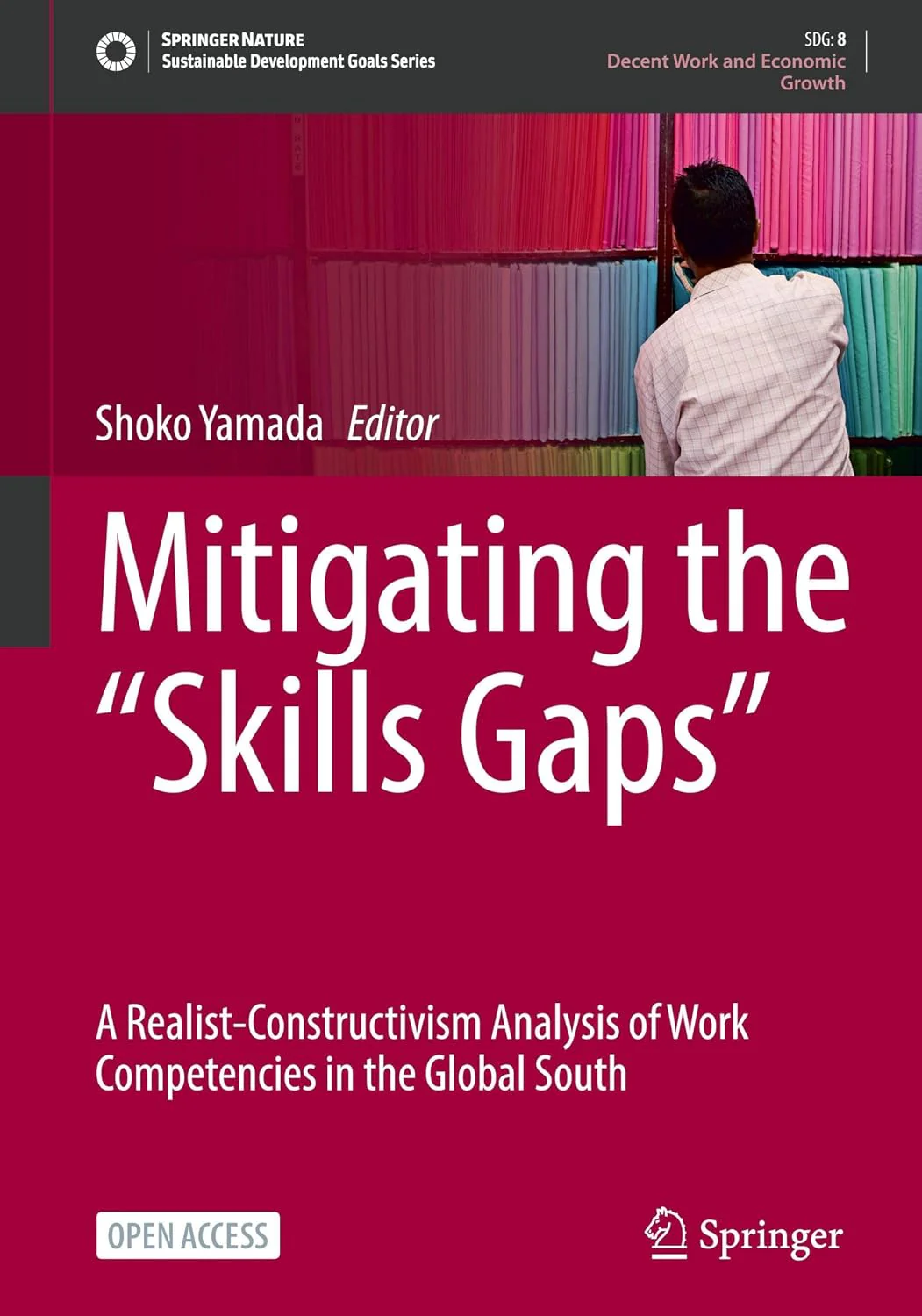
Mitigating the Skills Gaps is an open-access book that explores the complexities of what makes people competent at work. The emergence of new technologies and the rapid pace of global economic exchanges have made this question increasingly complicated. As consensus wanes on the necessary skills and knowledge for workplace success, discussions about competencies grow more heated—especially concerning the gaps between the demands and supplies of skilled workforces.
The primary objective of this book is to elucidate the true nature of the much-debated skills gaps, specifically through the lens of manufacturing workers in the Global South. Rather than relying on a broad and ambiguous understanding of human abilities, the book draws upon an extensive cross-disciplinary review and theorisation to propose a detailed classification of cognitive, non-cognitive (including socio-emotional skills and personality traits), and technical abilities. It presents explanations that are both contextually relevant and generalisable about the relationships among these abilities. Consequently, this volume provides invaluable insights for policymakers and practitioners aiming to enhance their human resources development policies and practices.
A secondary goal of the book is to introduce the analytical perspective of Realist-Constructivism by using skills gaps analysis as an empirical case. This approach demonstrates its theoretical, conceptual, and practical capacity to bridge the induction and deduction dichotomy through abductive reasoning. It also offers a set of instruments designed to collect data conducive to such analysis.
The book details empirical surveys that involved a series of questionnaires and skills assessments conducted in four countries within the Global South: Ethiopia, Ghana, South Africa, and Pakistan. Through Realist-Constructivism, the book considers work-related competencies in close connection with specific workplace requirements and culture, while also placing them within larger industrial, economic, and regulatory frameworks. The methods and instruments employed enable an understanding of the subjective epistemologies of competencies among individuals in workplace micro-ecologies, linking these to the ontological realities of labour market opportunities and evaluations.
Description
Mitigating the Skills Gaps is an open-access book that explores the complexities of what makes people competent at work. The emergence of new technologies and the rapid pace of global economic exchanges have made this question increasingly complicated. As consensus wanes on the necessary skills and knowledge for workplace success, discussions about competencies grow more heated—especially concerning the gaps between the demands and supplies of skilled workforces.
The primary objective of this book is to elucidate the true nature of the much-debated skills gaps, specifically through the lens of manufacturing workers in the Global South. Rather than relying on a broad and ambiguous understanding of human abilities, the book draws upon an extensive cross-disciplinary review and theorisation to propose a detailed classification of cognitive, non-cognitive (including socio-emotional skills and personality traits), and technical abilities. It presents explanations that are both contextually relevant and generalisable about the relationships among these abilities. Consequently, this volume provides invaluable insights for policymakers and practitioners aiming to enhance their human resources development policies and practices.
A secondary goal of the book is to introduce the analytical perspective of Realist-Constructivism by using skills gaps analysis as an empirical case. This approach demonstrates its theoretical, conceptual, and practical capacity to bridge the induction and deduction dichotomy through abductive reasoning. It also offers a set of instruments designed to collect data conducive to such analysis.
The book details empirical surveys that involved a series of questionnaires and skills assessments conducted in four countries within the Global South: Ethiopia, Ghana, South Africa, and Pakistan. Through Realist-Constructivism, the book considers work-related competencies in close connection with specific workplace requirements and culture, while also placing them within larger industrial, economic, and regulatory frameworks. The methods and instruments employed enable an understanding of the subjective epistemologies of competencies among individuals in workplace micro-ecologies, linking these to the ontological realities of labour market opportunities and evaluations.