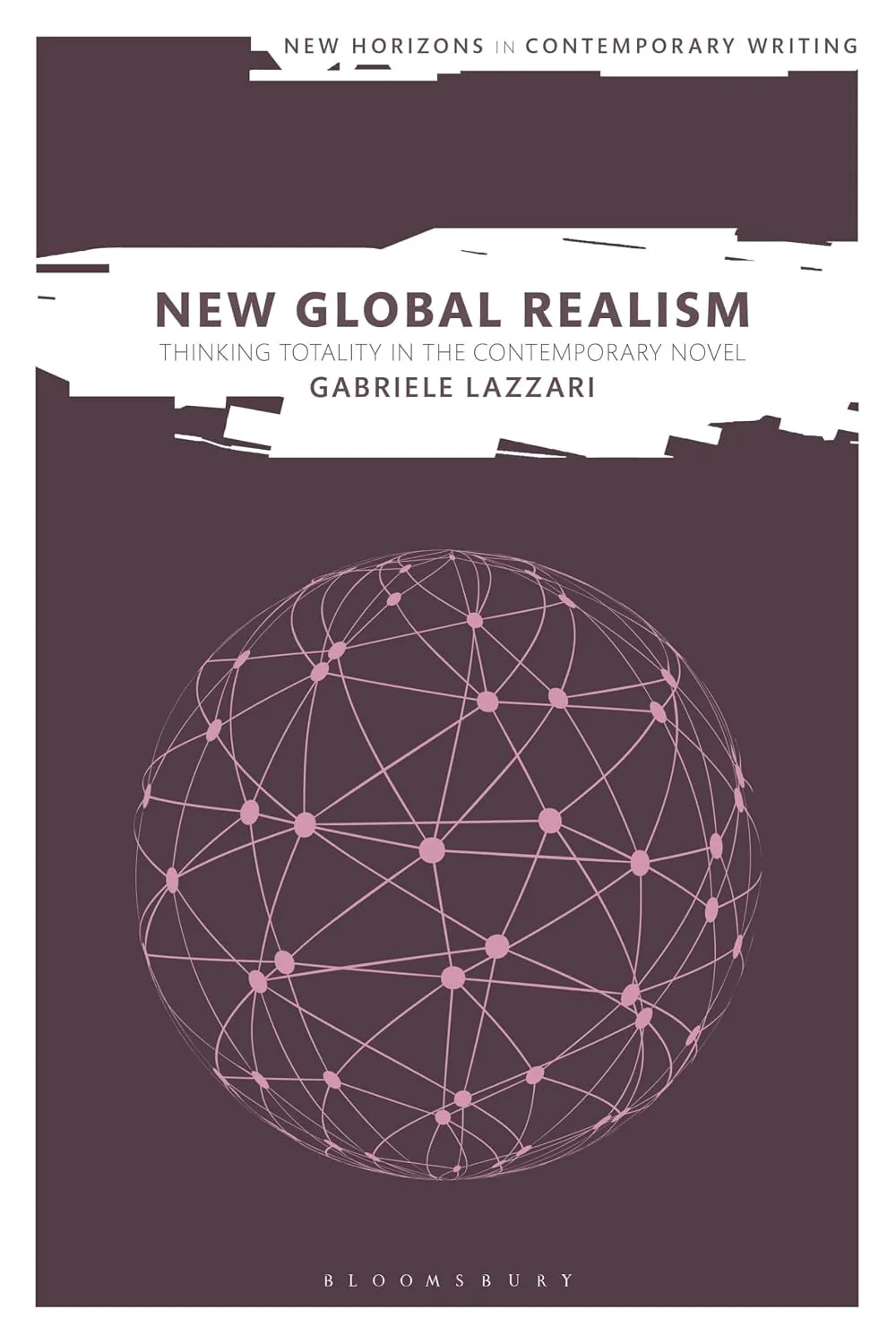
New Global Realism
Shortlisted for the BACLS Monograph Prize 2025
A comparative study of contemporary realist novels that employ totality as a method and a formal principle to represent the social and economic inequalities of the present, New Global Realism examines writing in English, Italian, Kannada, and Spanish by authors from Zimbabwe, Ghana, Italy, India, and Mexico.
By theorizing four modalities of totalization employed by contemporary realist writers, this book explores the current resurgence of realism and challenges critical approaches that consider it naive or formally unsophisticated. Instead, it argues that realist novels offer a self-conscious and serious representation of the world we inhabit while actively envisioning new social designs and political configurations.
Through comparative studies of novels by Fernanda Melchor, NoViolet Bulawayo, Vivek Shanbhag, Nicola Lagioia, Igiaba Scego, Yaa Gyasi, and Roberto Bolaño, New Global Realism further explains why realism can be a powerful antidote to the skepticism about the possibility of making truth-claims in humanist research.
Description
Shortlisted for the BACLS Monograph Prize 2025
A comparative study of contemporary realist novels that employ totality as a method and a formal principle to represent the social and economic inequalities of the present, New Global Realism examines writing in English, Italian, Kannada, and Spanish by authors from Zimbabwe, Ghana, Italy, India, and Mexico.
By theorizing four modalities of totalization employed by contemporary realist writers, this book explores the current resurgence of realism and challenges critical approaches that consider it naive or formally unsophisticated. Instead, it argues that realist novels offer a self-conscious and serious representation of the world we inhabit while actively envisioning new social designs and political configurations.
Through comparative studies of novels by Fernanda Melchor, NoViolet Bulawayo, Vivek Shanbhag, Nicola Lagioia, Igiaba Scego, Yaa Gyasi, and Roberto Bolaño, New Global Realism further explains why realism can be a powerful antidote to the skepticism about the possibility of making truth-claims in humanist research.