Perfectly Themselves
Wild horses spend their lives building and maintaining social bonds, moving together in synchrony, their communication constant and subtle. In domestication, we isolate them – move them from paddock to stable to yard – separating them from their companions for our convenience, then find them fragile, anxious and difficult to handle.
An immersive and transporting memoir, Perfectly Themselves offers intimate portraits of horses living freely in the company of their own kind, from Aotearoa to the Outer Hebrides, Iceland, and Mongolia. Underpinning Letteri’s research is a question sparked by a 33,000-year-old carved horse that seems alive with vitality and ease: what did we once know about horses that we have forgotten?
Part travel narrative, part intellectual inquiry, and part personal reckoning, Perfectly Themselves challenges long-held assumptions about human–horse relationships, inviting readers into a more compassionate way of seeing them – not as objects of human desire, but as beings perfect in themselves.
Original: $26.28
-65%$26.28
$9.20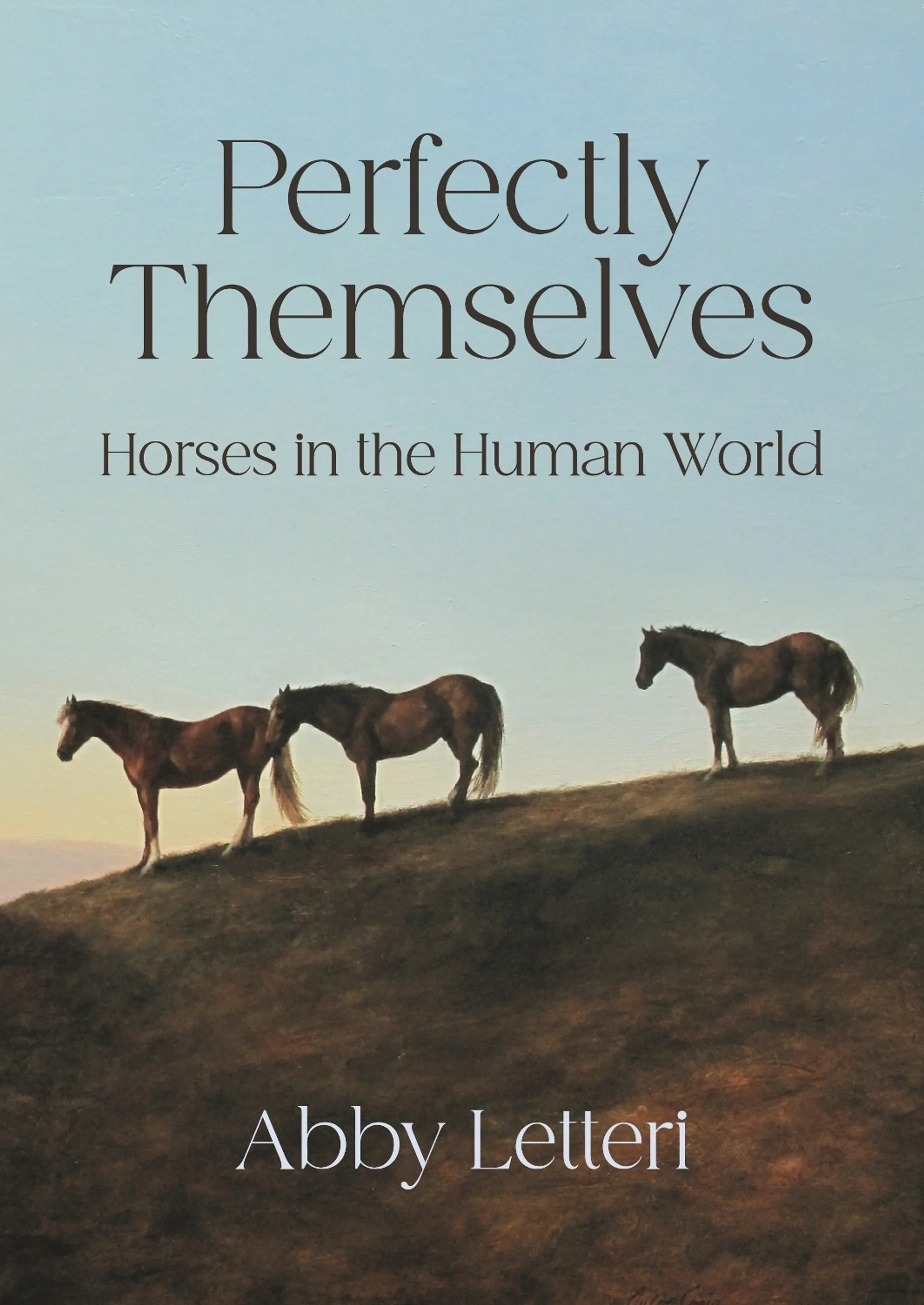
Description
Wild horses spend their lives building and maintaining social bonds, moving together in synchrony, their communication constant and subtle. In domestication, we isolate them – move them from paddock to stable to yard – separating them from their companions for our convenience, then find them fragile, anxious and difficult to handle.
An immersive and transporting memoir, Perfectly Themselves offers intimate portraits of horses living freely in the company of their own kind, from Aotearoa to the Outer Hebrides, Iceland, and Mongolia. Underpinning Letteri’s research is a question sparked by a 33,000-year-old carved horse that seems alive with vitality and ease: what did we once know about horses that we have forgotten?
Part travel narrative, part intellectual inquiry, and part personal reckoning, Perfectly Themselves challenges long-held assumptions about human–horse relationships, inviting readers into a more compassionate way of seeing them – not as objects of human desire, but as beings perfect in themselves.