Reliability Modelling
Reliability Modelling is an essential concept in mathematics, computing, research, and all disciplines of engineering. Reliability, as a characteristic, is, in fact, a probability. Therefore, in this book, the author uses the statistical approach to reliability modelling along with the MINITAB software package to provide a comprehensive treatment of modelling, from the basics through advanced modelling techniques.
The book begins by presenting a thorough grounding in the elements of modelling the lifetime of a single, non-repairable unit. Assuming no prior knowledge of the subject, the author includes a guide to all the fundamentals of probability theory. She defines the various measures associated with reliability, then describes and discusses the more common lifetime models: the exponential, Weibull, normal, lognormal, and gamma distributions. She concludes the groundwork by looking at ways of choosing and fitting the most appropriate model to a given data set, paying particular attention to two critical points: the effect of censored data and estimating lifetimes in the tail of the distribution.
The focus then shifts to topics somewhat more difficult:
- The difference in the analysis of lifetimes for repairable versus non-repairable systems and whether repair truly "renews" the system.
- Methods for dealing with systems with reliability characteristics specified for more than one component or subsystem.
- The effect of different types of maintenance strategies.
- The analysis of life test data.
The final chapter provides snapshot introductions to a range of advanced models and presents two case studies that illustrate various ideas from throughout the book.
Original: $261.12
-65%$261.12
$91.39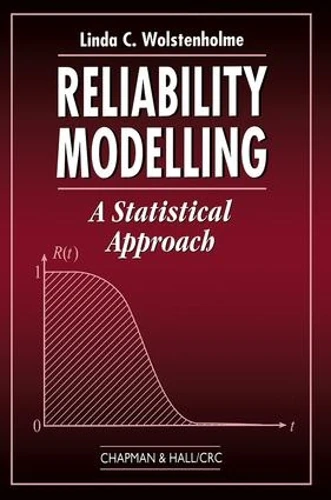
Description
Reliability Modelling is an essential concept in mathematics, computing, research, and all disciplines of engineering. Reliability, as a characteristic, is, in fact, a probability. Therefore, in this book, the author uses the statistical approach to reliability modelling along with the MINITAB software package to provide a comprehensive treatment of modelling, from the basics through advanced modelling techniques.
The book begins by presenting a thorough grounding in the elements of modelling the lifetime of a single, non-repairable unit. Assuming no prior knowledge of the subject, the author includes a guide to all the fundamentals of probability theory. She defines the various measures associated with reliability, then describes and discusses the more common lifetime models: the exponential, Weibull, normal, lognormal, and gamma distributions. She concludes the groundwork by looking at ways of choosing and fitting the most appropriate model to a given data set, paying particular attention to two critical points: the effect of censored data and estimating lifetimes in the tail of the distribution.
The focus then shifts to topics somewhat more difficult:
- The difference in the analysis of lifetimes for repairable versus non-repairable systems and whether repair truly "renews" the system.
- Methods for dealing with systems with reliability characteristics specified for more than one component or subsystem.
- The effect of different types of maintenance strategies.
- The analysis of life test data.
The final chapter provides snapshot introductions to a range of advanced models and presents two case studies that illustrate various ideas from throughout the book.