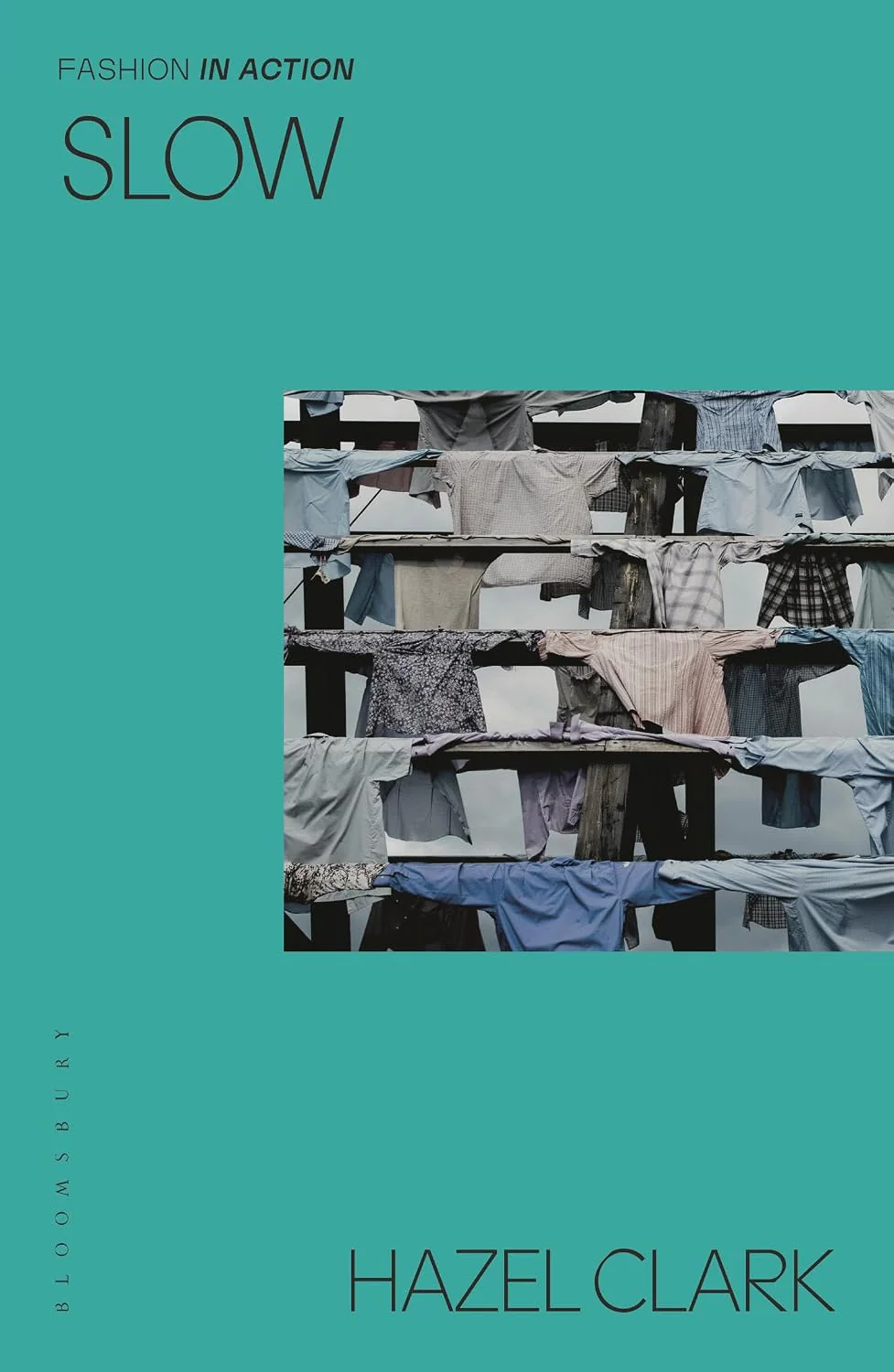
Slow
What if we took 'slow' as an ethical strategy and practice for fashion, rather than considering ‘slow fashion’ as another passing fashion movement?
Part of the Fashion in Action series of short books on global issues in fashion, calling on readers to become active participants in its future, Dr Hazel Clark explores fashion's cultural role as a potential force for, not against, sustainability. Against a backdrop of massive waste, intensive energy use, human exploitation, and over-consumption of fast fashion, Slow offers a thoughtful, practical, sustainable approach to fashion for businesses, educators, and ordinary wearers of clothes, speaking to more mindful, caring, and humanitarian attitudes and practices.
Divided into three sections, the argument is framed by neoliberalism, and the increased attention to fashion around the globe, set alongside a growing interest in eco-design, the slow food movement, second-hand clothes, and the emergence of ethical brands. The book begins with ‘where we are now,’ focussing on the emergence and huge impact of fast fashion. The next section looks at the way a slow discourse developed for fashion – in practice, in academia, and in public. More mindful and slow approaches are set against greater global connectivity, digital communications, climate change, and activism. This leads to a third and final section which seeks a redefinition of fashion through the lens of slow approaches, ending with an urgent call to action.
With references to good fashion practices and ideas from around the globe throughout, this book offers real guidance, and, crucially, advocates that real engagement with a 'slow' approach to fashion offers a more sustainable future for all.
Description
What if we took 'slow' as an ethical strategy and practice for fashion, rather than considering ‘slow fashion’ as another passing fashion movement?
Part of the Fashion in Action series of short books on global issues in fashion, calling on readers to become active participants in its future, Dr Hazel Clark explores fashion's cultural role as a potential force for, not against, sustainability. Against a backdrop of massive waste, intensive energy use, human exploitation, and over-consumption of fast fashion, Slow offers a thoughtful, practical, sustainable approach to fashion for businesses, educators, and ordinary wearers of clothes, speaking to more mindful, caring, and humanitarian attitudes and practices.
Divided into three sections, the argument is framed by neoliberalism, and the increased attention to fashion around the globe, set alongside a growing interest in eco-design, the slow food movement, second-hand clothes, and the emergence of ethical brands. The book begins with ‘where we are now,’ focussing on the emergence and huge impact of fast fashion. The next section looks at the way a slow discourse developed for fashion – in practice, in academia, and in public. More mindful and slow approaches are set against greater global connectivity, digital communications, climate change, and activism. This leads to a third and final section which seeks a redefinition of fashion through the lens of slow approaches, ending with an urgent call to action.
With references to good fashion practices and ideas from around the globe throughout, this book offers real guidance, and, crucially, advocates that real engagement with a 'slow' approach to fashion offers a more sustainable future for all.