The March of Patriots
The March of Patriots is the inside story of how Paul Keating and John Howard changed Australia. It sees Keating and Howard as conviction politicians, tribal warriors, and national interest patriots.
Divided by belief, temperament, and party, they were united by generation, city, and the challenge to make Australia into a successful nation for the globalised age.
This book is about the making of policy and the uses of power. It captures the authentic nature of Australian politics, distinct from the polemics advanced by both sides. Its focus is on how Keating and Howard as Prime Ministers altered the nation's direction, redefined their parties, and struggled over Australia's new economic, social, cultural, and foreign policy agendas.
A sequel to Paul Kelly's bestselling The End of Certainty, it is based on more than 100 interviews with the two key players, politicians, advisers, and public servants. It relies heavily on 'on the record' disclosures and new documents from the period. Its theme is that Keating and Howard, as rivals and unrecognised collaborators, are best seen together, and that their legacy is impressive, contradictory, and incomplete.
Original: $46.73
-65%$46.73
$16.36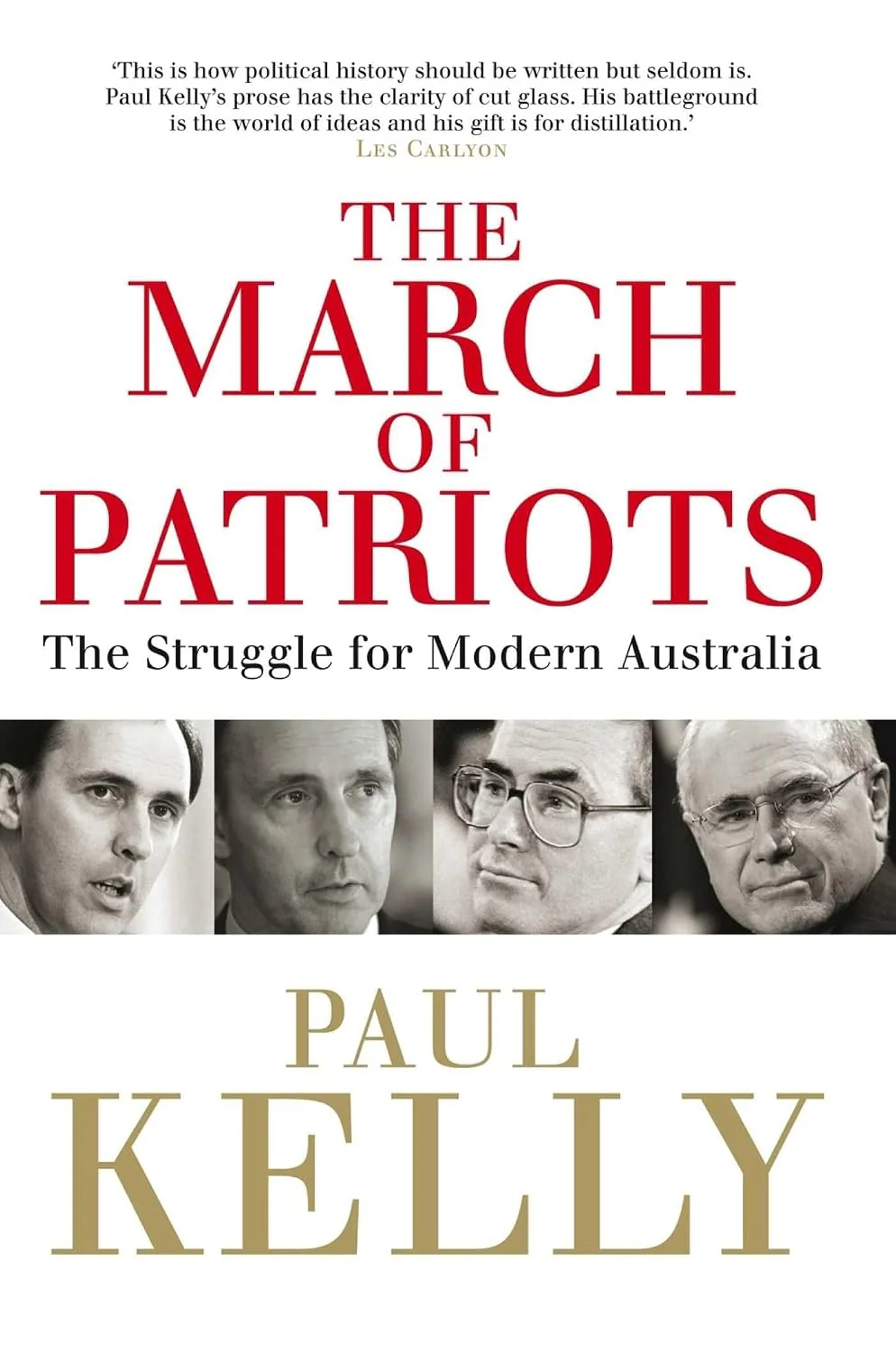
Description
The March of Patriots is the inside story of how Paul Keating and John Howard changed Australia. It sees Keating and Howard as conviction politicians, tribal warriors, and national interest patriots.
Divided by belief, temperament, and party, they were united by generation, city, and the challenge to make Australia into a successful nation for the globalised age.
This book is about the making of policy and the uses of power. It captures the authentic nature of Australian politics, distinct from the polemics advanced by both sides. Its focus is on how Keating and Howard as Prime Ministers altered the nation's direction, redefined their parties, and struggled over Australia's new economic, social, cultural, and foreign policy agendas.
A sequel to Paul Kelly's bestselling The End of Certainty, it is based on more than 100 interviews with the two key players, politicians, advisers, and public servants. It relies heavily on 'on the record' disclosures and new documents from the period. Its theme is that Keating and Howard, as rivals and unrecognised collaborators, are best seen together, and that their legacy is impressive, contradictory, and incomplete.