The Sound Patterns of Taiwanese Southern Min
The Sound Patterns of Taiwanese Southern Min by Yuchau E. Hsiao is an in-depth exploration of Southern Min – the most commonly spoken variant of Taiwanese, with over 100 million speakers. This book provides the first comprehensive analysis of Taiwanese Southern Min (TSM) phonology, filling a critical gap in linguistic research.
It demonstrates how the language's sound patterns have evolved over time and explores its key phonological and tonal features. Beginning with an overview of the language's phonological system, it progresses to specialised topics, including segmental and tonal mutations, tonal domains, and metrical structures.
Grounded in three purpose-built corpora, it integrates empirical data and statistical analyses to illuminate phonological processes and patterns. The book also explores rarely addressed topics, including phonological interfaces, the rhythms of poetry and folk ballads, and the iGeneration dialectal variety, providing analytical clarity on complex phenomena.
Serving as both a detailed reference for researchers and a supplementary text for phonology and Asian linguistics courses, its illuminating insights will inspire further research into this intricate linguistic system.
Original: $212.63
-65%$212.63
$74.42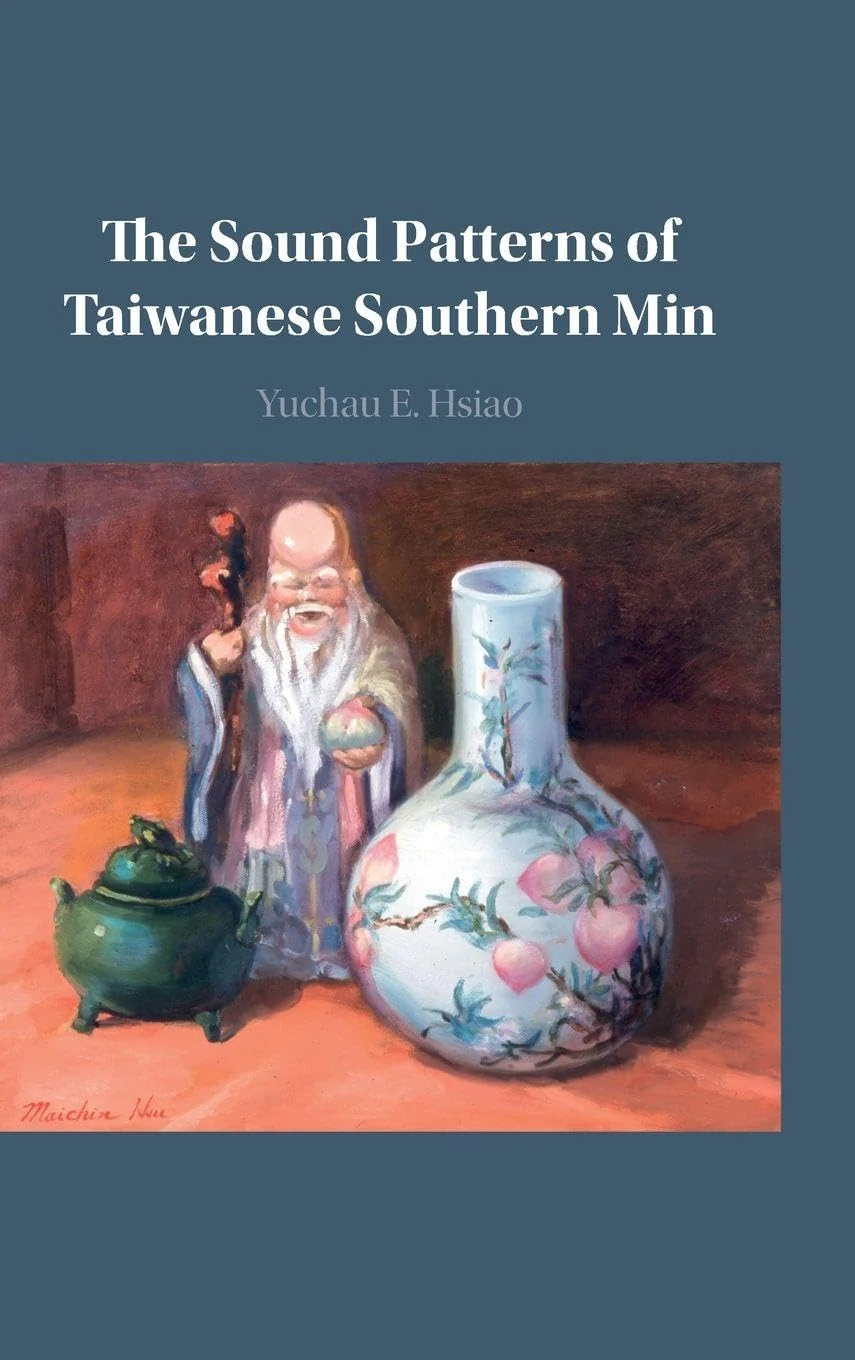
Description
The Sound Patterns of Taiwanese Southern Min by Yuchau E. Hsiao is an in-depth exploration of Southern Min – the most commonly spoken variant of Taiwanese, with over 100 million speakers. This book provides the first comprehensive analysis of Taiwanese Southern Min (TSM) phonology, filling a critical gap in linguistic research.
It demonstrates how the language's sound patterns have evolved over time and explores its key phonological and tonal features. Beginning with an overview of the language's phonological system, it progresses to specialised topics, including segmental and tonal mutations, tonal domains, and metrical structures.
Grounded in three purpose-built corpora, it integrates empirical data and statistical analyses to illuminate phonological processes and patterns. The book also explores rarely addressed topics, including phonological interfaces, the rhythms of poetry and folk ballads, and the iGeneration dialectal variety, providing analytical clarity on complex phenomena.
Serving as both a detailed reference for researchers and a supplementary text for phonology and Asian linguistics courses, its illuminating insights will inspire further research into this intricate linguistic system.