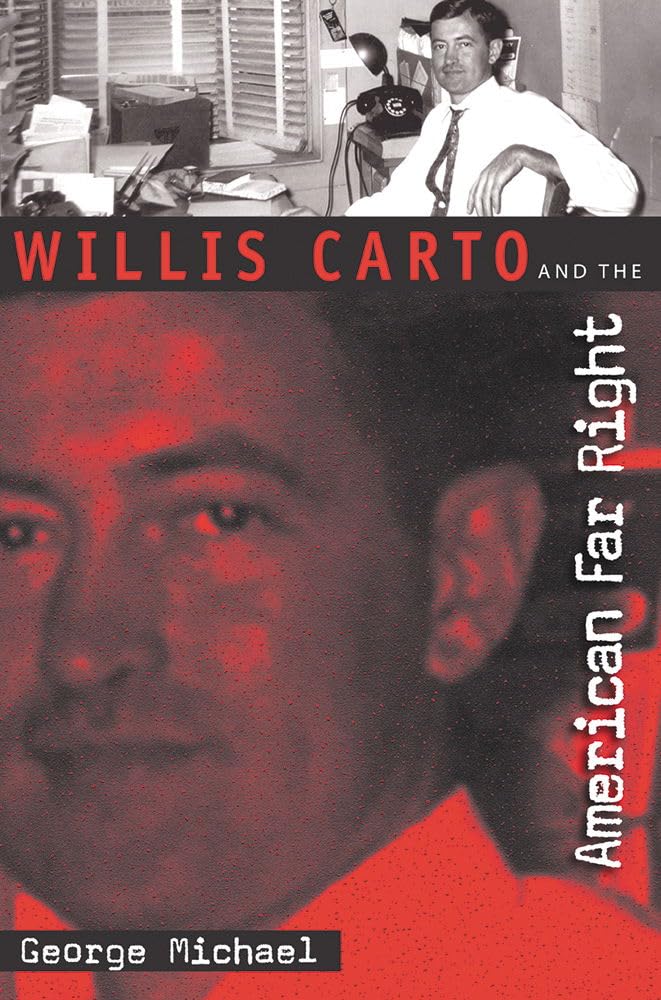
Willis Carto and the American Far Right
A biography of an influential radical conservative who sought to unite the far right
Willis Carto and the American Far Right offers a comprehensive look into the life of Willis Carto (1926-2015), arguably the most important radical conservative in postwar America. Best known as the founder of the infamous Liberty Lobby, he significantly influenced the far right's stance on issues such as immigration, globalization, multiculturalism, Holocaust denial, and conflict in the Middle East.
Granted remarkable personal access to the notoriously reclusive Carto, George Michael has crafted a fascinating biography. Throughout his long political career, Carto endeavoured to unite the various movements that comprise the far right. To achieve this, he reached out to individuals from both the fringe and the mainstream.
Michael provides an account of the various publishing and organisational ventures in which Carto was involved, including the Institute for Historical Review, The Spotlight, Youth for Wallace, the Populist Party, American Free Press, and the political career of David Duke. The result is a captivating portrait of this dedicated, frightening, and controversial man.
Description
A biography of an influential radical conservative who sought to unite the far right
Willis Carto and the American Far Right offers a comprehensive look into the life of Willis Carto (1926-2015), arguably the most important radical conservative in postwar America. Best known as the founder of the infamous Liberty Lobby, he significantly influenced the far right's stance on issues such as immigration, globalization, multiculturalism, Holocaust denial, and conflict in the Middle East.
Granted remarkable personal access to the notoriously reclusive Carto, George Michael has crafted a fascinating biography. Throughout his long political career, Carto endeavoured to unite the various movements that comprise the far right. To achieve this, he reached out to individuals from both the fringe and the mainstream.
Michael provides an account of the various publishing and organisational ventures in which Carto was involved, including the Institute for Historical Review, The Spotlight, Youth for Wallace, the Populist Party, American Free Press, and the political career of David Duke. The result is a captivating portrait of this dedicated, frightening, and controversial man.